
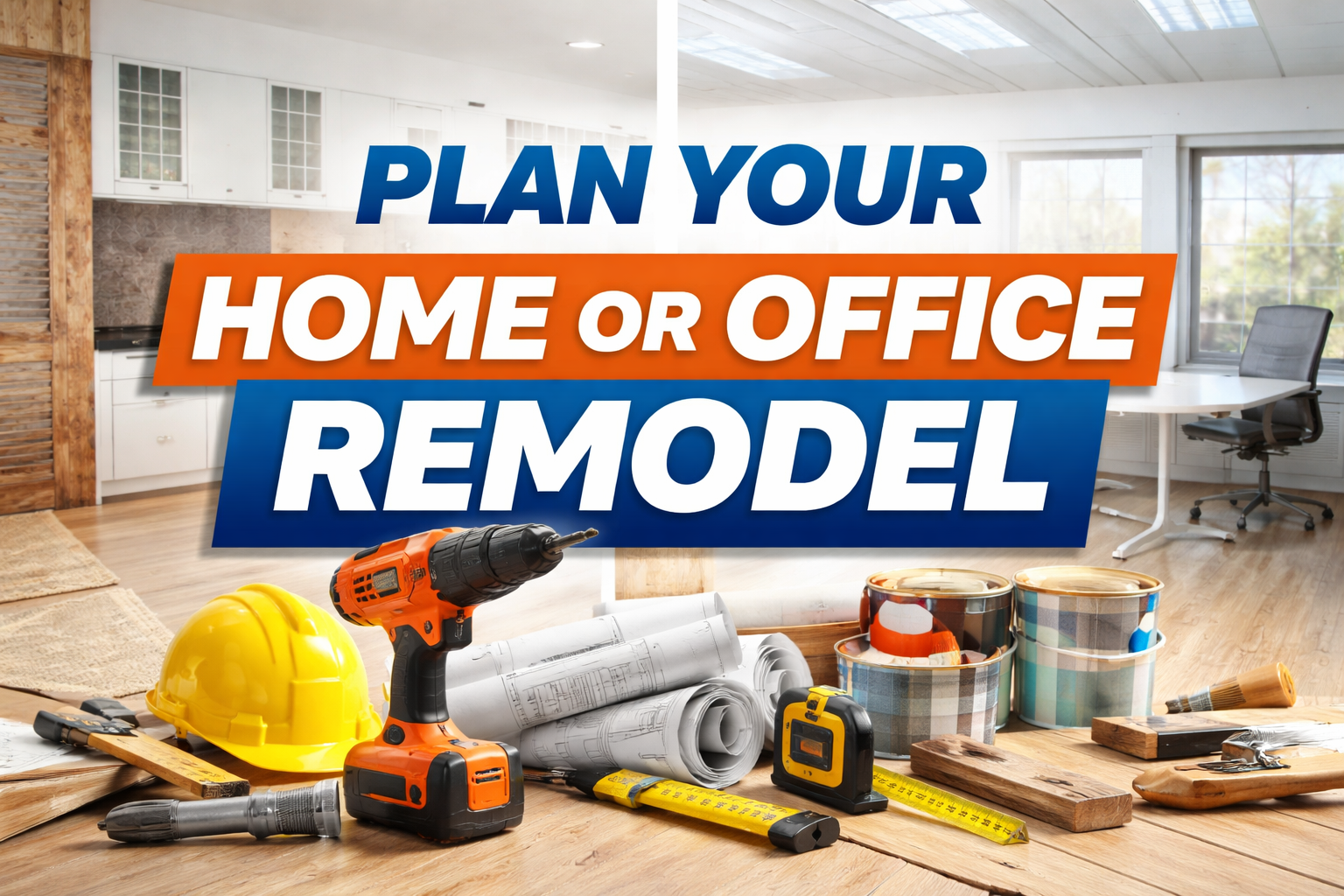

How to Plan a Successful Home or Office Remodel (Without Blowing Your Budget)
/GoVets-Favicon-96x96.png?width=48&height=48&name=GoVets-Favicon-96x96.png)
GoVets Editorial Team
Remodeling a home or office is an exciting opportunity to improve functionality, increase value, and create a space that better fits your needs. But without a solid plan, it can quickly become overwhelming and expensive. Whether you're updating a workspace for productivity or modernizing your home, a structured approach—and the right tools—can make all the difference.
Below is a practical guide to help you plan your remodel efficiently, along with essential products you can source directly from GoVets.
1. Define Your Goals and Scope
Start by identifying what you want to achieve:
- Are you improving aesthetics, functionality, or both?
- Is this a full remodel or a targeted upgrade (kitchen, office, flooring)?
- What problems are you trying to solve?
Clear goals help you avoid scope creep and keep your budget in check.
2. Set a Realistic Budget
Break your budget into categories:
- Materials
- Labor
- Tools and equipment
- Contingency (typically 10–20%)
Even if you're hiring contractors, having your own tools and supplies can reduce costs and give you more control over the project.
View construction tools and equipment
3. Plan the Design and Layout
For offices:
- Focus on workflow, lighting, and ergonomics
- Consider storage and cable management
For homes:
- Think about traffic flow, lighting, and long-term usability
Before committing, sketch layouts or use digital planning tools to visualize the space.
4. Choose the Right Materials
Material selection affects durability, cost, and maintenance.
Common categories to plan for:
- Flooring
- Wall finishes
- Fixtures
- Hardware
View building materials and supplies
View fasteners, brackets, and mounting hardware:
5. Prioritize Safety and Compliance
Remodeling projects often involve risks—dust, electrical work, heavy lifting.
Make sure you have proper safety equipment and PPE:
This includes:
- Gloves
- Safety glasses
- Respirators
- Protective clothing
If you're working in a commercial or office environment, compliance is especially important.
6. Upgrade Electrical and Lighting Systems
Lighting can dramatically change a space’s usability and feel.
Consider:
- LED upgrades for efficiency
- Task lighting for workspaces
- Smart controls for convenience
Explore lighting solutions and electrical supplies
7. Invest in the Right Tools
Even small remodels benefit from having the right tools on hand.
Essentials include:
- Power drills
- Measuring tools
- Cutting equipment
- Levels and layout tools
Shop power tools and hand tools
8. Plan for Storage and Organization
A remodel is the perfect time to improve organization.
For offices:
- Shelving systems
- Storage cabinets
- Workstations
For homes:
- Garage storage
- Closet systems
Browse material handling and storage solutions
9. Schedule and Sequence the Work
A well-planned timeline prevents delays and rework.
Typical order:
- Demolition
- Structural work
- Electrical/plumbing
- Walls and flooring
- Fixtures and finishes
Having supplies ready ahead of time helps keep everything on track.
10. Final Touches and Maintenance
Once the remodel is complete:
- Inspect all work
- Test systems
- Clean thoroughly
Stock up on janitorial and cleaning supplies to maintain your new space
Conclusion
A successful remodel comes down to planning, budgeting, and using the right materials and tools. By sourcing your supplies from a reliable vendor, you can streamline the process and ensure quality from start to finish.
Explore GoVets’ full catalog to support your next project
Whether you're upgrading a workspace or transforming your home, having the right products on hand will help you complete your remodel efficiently and professionally.