Federal Procurementbuying guidesGSA Advantage
/govets-registered-small.png?width=800&height=308&name=govets-registered-small.png "GoVets Logo")
/govets-registered-small.png?width=130&height=50&name=govets-registered-small.png "govets-registered-small")
Your program needs supplies, funding is available, and the specifications are ready. The next decision is where to buy. …
/GoVets-Favicon-96x96.png?width=40&height=40&name=GoVets-Favicon-96x96.png)

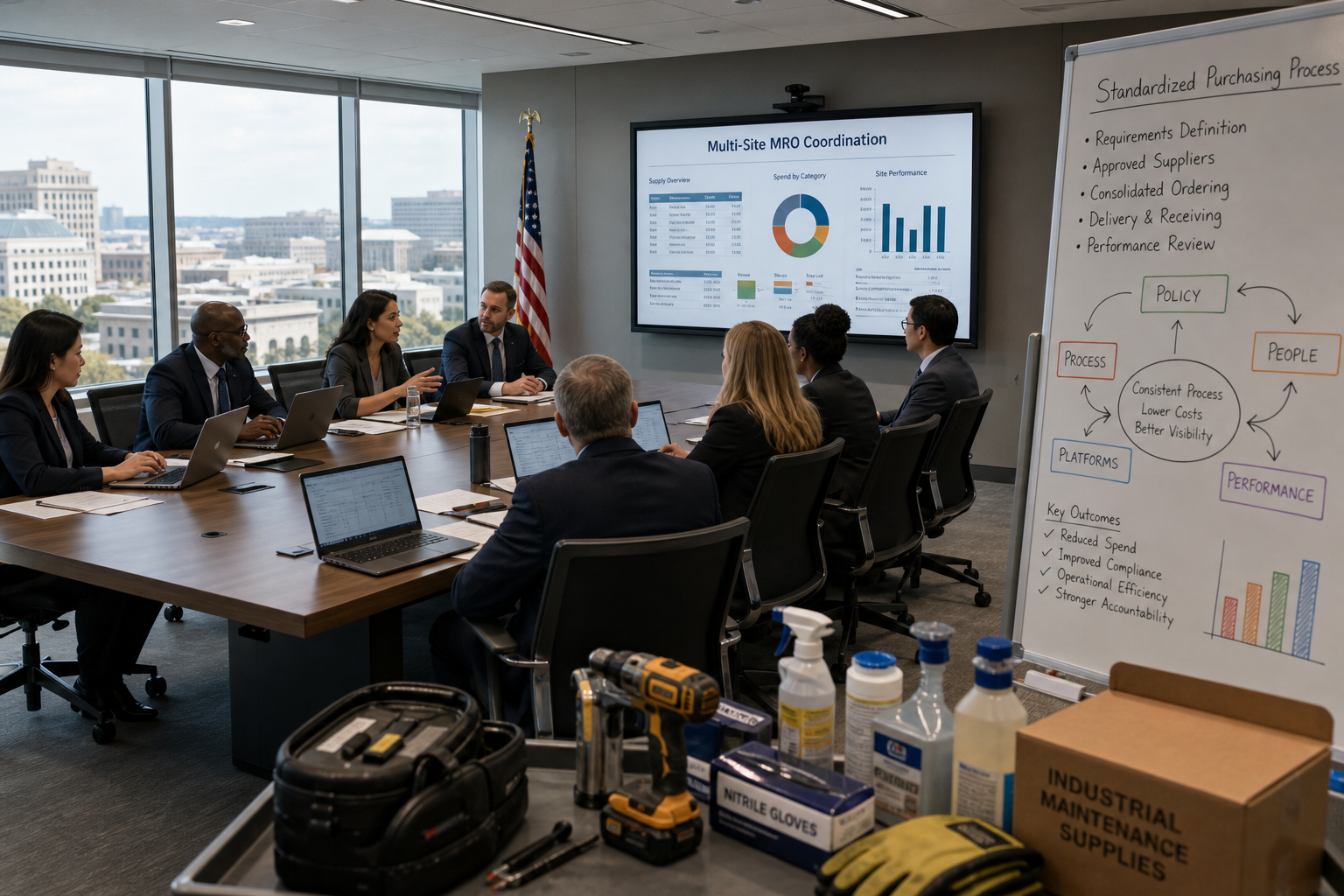
Buying maintenance, repair, and operations (MRO) supplies for a single facility is straightforward. Buying for ten facil …
Federal buyers evaluating small-business contracting opportunities need to distinguish supplier status from the acquisit …

Before selecting equipment or a supplier, federal buyers need to understand the supply chain behind the purchase. Teleco …

Federal buyers preparing supply orders need to revisit country-of-origin information before relying on familiar Schedule …
If you buy supplies for a federal agency — whether you're a contracting officer, a government purchase card (GPC) holder …

Every October, government facility teams face the same calendar problem: flu season begins just as the fiscal-year-end o …

When you need supplies or services for an agency, choosing a purchasing method is part of defining the requirement. A su …

Federal fiscal year 2027 began October 1, 2026, and runs through September 30, 2027. Q1, October through December 2026, …